A History of Tolerance: Amsterdam's Cannabis Story
Understand how Amsterdam became the world's cannabis capital. From the counter-culture of the 60s to today's premium market.
Dave Mak
Amsterdam Cannabis Explorer
A Brief History of Tolerance: How Amsterdam Became the Cannabis Capital of the World
Amsterdam did not accidentally become the world's cannabis capital. It was a deliberate, pragmatic political decision born out of decades of social movement, government frustration with prohibition, and a distinctly Dutch belief in the power of harm reduction over punishment.
The Timeline
| Era | Event | Impact |
|---|---|---|
| 1960s | Counter-culture movement reaches Amsterdam | Cannabis becomes a symbol of personal freedom |
| 1972 | Police begin informal tolerance of soft drug possession | Enforcement resources shift to hard drugs |
| 1976 | Opium Act revised — gedoogbeleid introduced | Cannabis possession of small amounts officially tolerated |
| 1980s | Coffeeshop numbers explode — 350+ in Amsterdam alone | A new industry is born |
| 1995 | Purchase limit reduced from 30g to 5g | EU pressure tightens the rules |
| 1999 | No new licences issued — numbers begin to fall | Quality improves as competition consolidates |
| 2012 | National "weed pass" residency rule introduced | Amsterdam refuses to enforce it |
| 2023 | Public smoking blowverbod enacted in Red Light District | Smoking outdoors in tourist zones banned |
| 2025 | Dutch Wietexperiment supply-chain pilot begins | Licensed growing for coffeeshops in 10 cities (not Amsterdam) |
The 1960s — Cannabis Arrives in Amsterdam
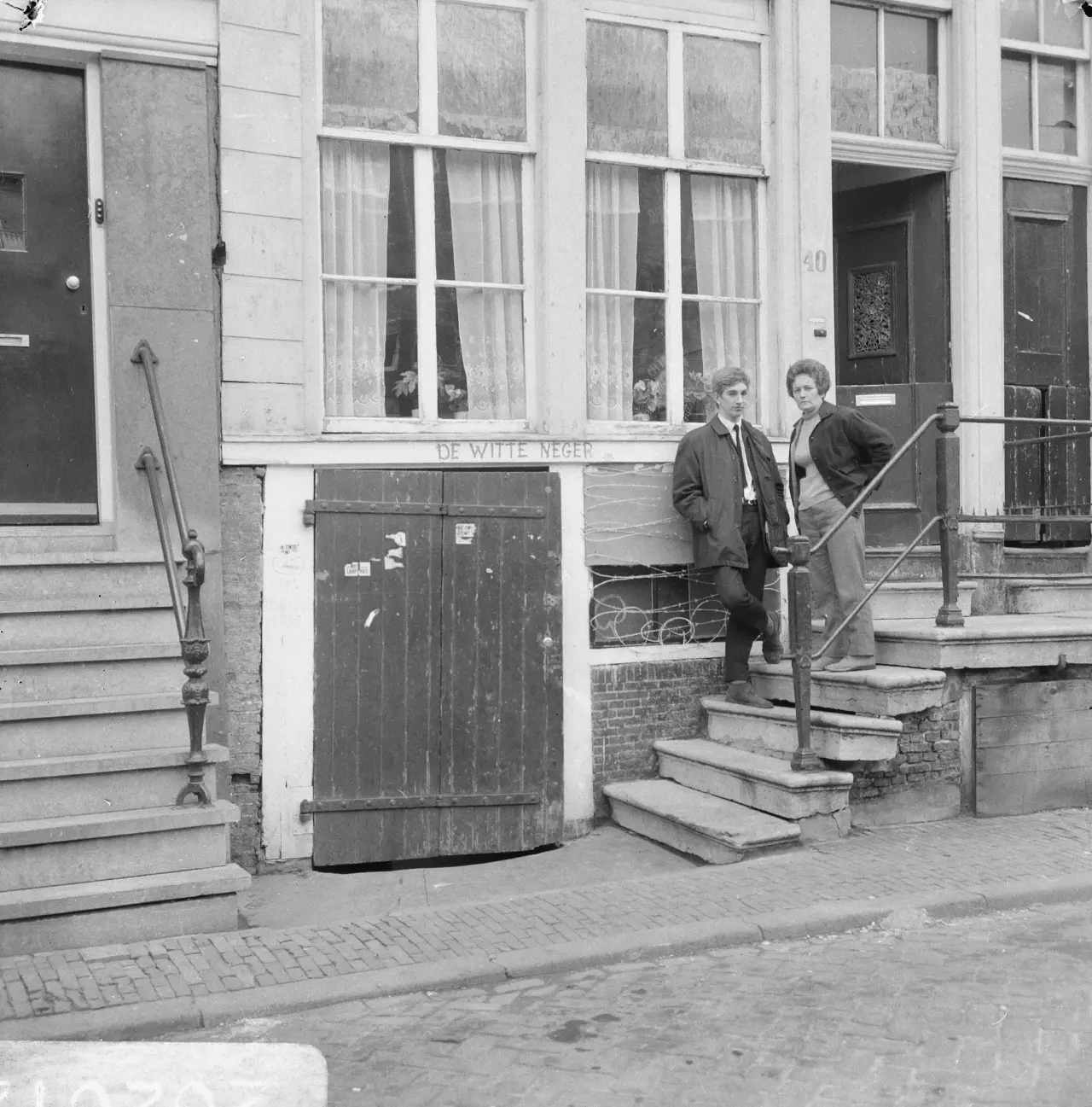
Like many European cities, Amsterdam in the 1960s became a focal point for the post-war counter-culture. Squatters, artists, hippies, and activists from across the continent were drawn to the city's cheap housing, liberal reputation, and welcoming atmosphere.
The Provo movement — a group of Dutch anarchist provocateurs — used cannabis as a direct political statement, distributing it in public as protest against state authority. Cannabis wasn't just a recreational choice; it was a political act.
The result was thousands of young people using a substance that was technically illegal but universally tolerated by a police force that had far bigger concerns.
1976 — The Gedoogbeleid: Tolerance as Policy
The Dutch government faced a problem in the early 1970s that no amount of enforcement could solve: cannabis use was widespread, growing, and impossible to police without consuming enormous resources — resources urgently needed to tackle the heroin epidemic sweeping Dutch cities.
The solution was radical in its simplicity: separate the markets.
In 1976, the Opium Act was revised to introduce the gedoogbeleid — a formal policy of non-prosecution for small amounts of cannabis. The logic was direct:
If cannabis users have to go to black-market dealers to buy weed, they're in the same room as heroin. If you give them a legal, safe, regulated alternative, you keep soft and hard drug users apart.
This was not legalisation. Cannabis remained illegal under the Opium Act. But it would not be prosecuted. The distinction matters — and still does today.
The 1980s — The Golden Age of Coffeeshops
With the policy in place, coffeeshops multiplied rapidly. By the mid-1980s, Amsterdam alone had over 350 licensed premises. The atmosphere was deliberately civic — the word "coffeeshop" was chosen to signal a calm, social space, not a drug den. You came for coffee, maybe some weed, and a conversation.
The shops that survived this era — Paradox (founded 1982), Siberie, Grey Area — set the tone for what a good Amsterdam coffeeshop could be: local, unhurried, human.
Regulations tightened through this period. The AHOJG criteria were formalised:
- A — No advertising
- H — No hard drugs on premises
- O — No nuisance to neighbours
- J — No entry for under-18s
- G — No sales above 5 grams per transaction
1995–1999 — The Rules Tighten
EU pressure and growing concern about "drug tourism" led to a significant policy shift in 1995: the purchase limit dropped from 30g to 5g, and maximum on-site stock was capped at 500g.
In 1999, the city stopped issuing new licences entirely. The number of licensed shops has fallen from 350+ in the 1980s to around 160 today. Consolidation has, paradoxically, improved quality — the shops that survived are generally the best-run.
2012 — The Weed Pass That Wasn't
The national government's 2012 attempt to restrict coffeeshops to Dutch residents only — requiring a "weedpas" membership card — was a policy that worked in some border towns (Maastricht, Roosendaal) and completely failed everywhere else.
Amsterdam refused to implement it. The mayor's argument was economic: cannabis tourism contributed hundreds of millions to the city's economy, and driving it underground would create more problems than it solved. The government backed down. Amsterdam won.
Today — A Premium, Mature Market
What has emerged in the 2020s is something the founders of the gedoogbeleid couldn't have imagined: a world-class, quasi-legal cannabis market producing and selling flower that competes with anything available in California dispensaries.
- California genetics (Runtz, Gelato, Gary Payton) command €25–35/g at specialist shops
- Dutch craft growers like AMG continue to produce multi-award-winning strains under domestic conditions
- Solventless extracts — dry-sift, ice-o-lator, rosin — are being produced locally to exceptional standards
- The supply chain remains the fundamental unsolved problem — the "backdoor" is still illegal, but a pilot scheme in 10 Dutch cities (the Wietexperiment) may finally change that
Frequently Asked Questions
When did coffeeshops first open in Amsterdam?
The first coffeeshops emerged in the early 1970s as the Dutch government began informal tolerance of cannabis, but the formal policy (gedoogbeleid) was established in 1976 following the revision of the Opium Act. Shops like Paradox (1982) and Siberie date from this early era.
Is weed actually legal in Amsterdam?
No — cannabis remains technically illegal under the Dutch Opium Act. What exists is a formal policy of tolerance (gedoogbeleid) under which possession of small amounts and sales at licensed coffeeshops are not prosecuted. This is not the same as full legalisation.
Why did Amsterdam become the coffeeshop capital of the world?
The Dutch government chose a harm-reduction approach in 1976, separating cannabis users from hard drug markets by creating a regulated soft drug environment. Amsterdam's refusal to enforce national residency restrictions in 2012 ensured it remained accessible to tourists, cementing its global reputation.
How many coffeeshops are in Amsterdam?
Around 160 licensed coffeeshops operate in Amsterdam as of 2026, down from a peak of 350+ in the 1980s. No new licences have been issued since 1999.
What is the backdoor problem?
Coffeeshops can legally sell cannabis (the front door) but the growers and suppliers remain illegal (the back door). This fundamental contradiction means coffeeshops must source from black-market growers, keeping organised crime involved in the supply chain. A government pilot scheme (the Wietexperiment) is testing licensed growing in 10 Dutch cities.
Find Hotels near Amsterdam Centrum
Find the best smoker-friendly hotels and boutique stays in the Amsterdam Centrum area.
Read Next
More guides from the History category.
%2C_juli_2012_-_panoramio.webp&w=3840&q=75)
The Ultimate Amsterdam Smoke Boat Guide (2026): 420-Friendly Canal Cruises Ranked
Big Menus vs Small Menus: What Coffeeshop Menu Size Really Means (2026)
