
Why Everything Tastes Like Gelato: The Genetic Takeover of Amsterdam Menus
How a handful of modern 'Cali' hybrids completely dominated the Amsterdam coffeeshop scene, pushing out the classic Dutch strains of the 90s.
Dave Mak
Amsterdam Cannabis Explorer
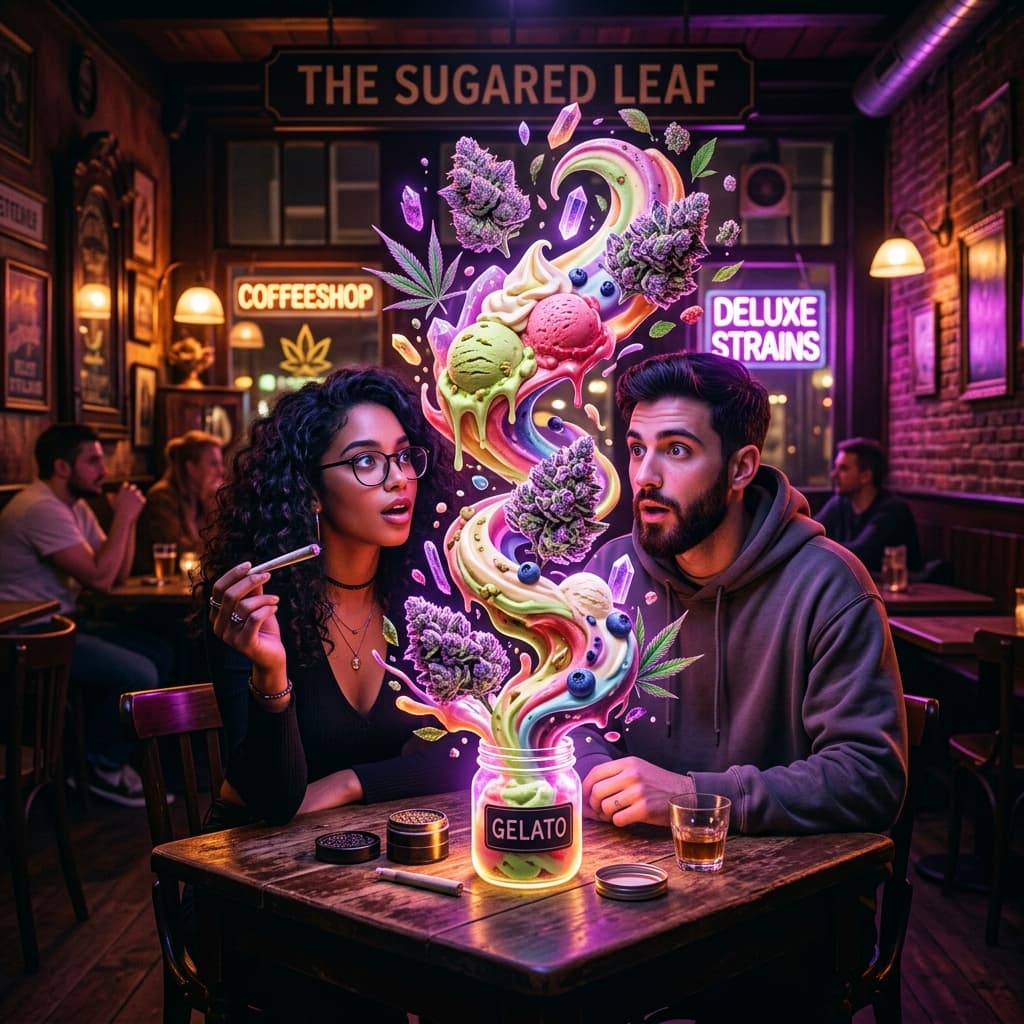
Look at the menu of almost any premium Amsterdam coffeeshop in 2026, and you'll notice a massive shift from just a decade ago.
The classic Dutch strains that built the city's reputation—White Widow, Jack Herer, Northern Lights, and Super Silver Haze—have been relegated to the bottom of the menu. Taking up the top half, commanding premium prices of €25 to €35 a gram, are the "Cali" strains: Gelato, Zkittlez, Runtz, Wedding Cake, and Biscotti.
How did a few dessert-themed American hybrids manage to completely conquer the Dutch market?
The Shift from Gas to Candy
If you trace the genetic timeline of cannabis, you'll see clear eras of dominance. The 1990s were ruled by the skunky, pungent Dutch breeds. The 2000s were dominated by the heavy, fuel-scented OG Kush lineages from the West Coast.
But the 2010s era brought a massive paradigm shift. Breeders in California, particularly the Cookie Fam, began crossing thin mint Girl Scout Cookies with fruity strains like Sunset Sherbet. The result was Gelato—a strain that offered dense purple bag appeal, high THC, and an incredibly sweet, creamy terpene profile.
The Poly-Hybrid Bottleneck
Gelato was so universally beloved that breeders immediately started crossing it with everything.
- Cross Gelato with Zkittlez, you get Runtz.
- Cross Gelato with Wedding Cake, you get Ice Cream Cake.
- Cross Gelato with Biscotti, you get Biscotti Gelato.
This has led to a phenomenon known as the "poly-hybrid bottleneck." Because consumers constantly demand high-THC, sweet-tasting strains, commercial growers are incentivized to only grow Gelato descendants. As a result, the genetic diversity on Amsterdam's menus has plummeted. Everything tastes faintly of creamy vanilla and sweet fruit because nearly everything on the top shelf shares the exact same grandfather.
The Dutch Response
Amsterdam's local growers have had to adapt. Rather than sticking stubbornly to 16-week flowering Sativas like Amnesia Haze, Dutch seedbanks are now back-crossing Cali genetics with stable European lineages to create "Dutch-grown Cali." This allows shops to offer Gelato-style flavor profiles at €15 a gram instead of €30 for direct imports.
Is This a Bad Thing?
If you love dense, frosty, dessert-flavored cannabis that hits over 25% THC, this is the golden age. The modern Cali genetics are objectively stunning to look at and incredibly potent.
However, many veterans argue that we are losing the complex, soaring highs of the classic Hazes, and the heavy, narcotic body stones of the original Kushes.
If you want to understand exactly how we got here, you can explore the entire family tree of Gelato and its descendants on the Strain Genetics Archive.
Find Hotels near Amsterdam Centrum
Find the best smoker-friendly hotels and boutique stays in the Amsterdam Centrum area.
Read Next
More guides from the culture category.